
Although most Final Fantasy installments are supposedly independent stories with different settings and main characters, they feature identical elements that define the franchise. Recurring elements include plot themes, character names, and game mechanics. Plots center on a group of heroes battling a great evil while exploring the characters' internal struggles and relationships. Character names are frequently derived from the history, languages, and mythologies of cultures worldwide.
The series has been commercially and critically successful; it is Square Enix's best selling video game franchise, with more than 100 million units sold, and one of the best-selling video game franchises. It was awarded a star on the Walk of Game in 2006, and holds seven Guinness World Records in the Guinness World Records Gamer's Edition 2008. The series is well known for its innovation, visuals, and music, such as the inclusion of full motion videos, photo-realistic character models, and orchestrated music by Nobuo Uematsu. Final Fantasy has been a driving force in the video game industry, and the series has affected Square's business practices and its relationships with other video game developers. It has also introduced many features now common in role-playing video games and has been credited with helping to popularize console-based RPGs in markets outside Japan.

Main series
Three Final Fantasy installments were released on the Nintendo Entertainment System (NES). Final Fantasy was released in Japan in 1987 and in North America in 1990.[2][3] It introduced many concepts to the console RPG genre, and has since been remade on several platforms.[3] Final Fantasy II, released in 1988 in Japan, has been bundled with Final Fantasy in several re-releases.[3][4][5] The last of the NES installments, Final Fantasy III, was released in Japan in 1990;[6] however, it was not released elsewhere until a Nintendo DS remake in 2006.[5]The Super Nintendo Entertainment System (SNES) also featured three installments of the main series, all of which have been re-released on several platforms. Final Fantasy IV was released in 1991; in North America, it was released as Final Fantasy II.[7][8] It introduced the "Active Time Battle" system.[9] Final Fantasy V, released in 1992 in Japan, was the first game in the series to spawn a sequel: a short anime series titled Final Fantasy: Legend of the Crystals.[3][10][11] Final Fantasy VI was released in Japan in 1994, but it was titled Final Fantasy III in North America.[12]
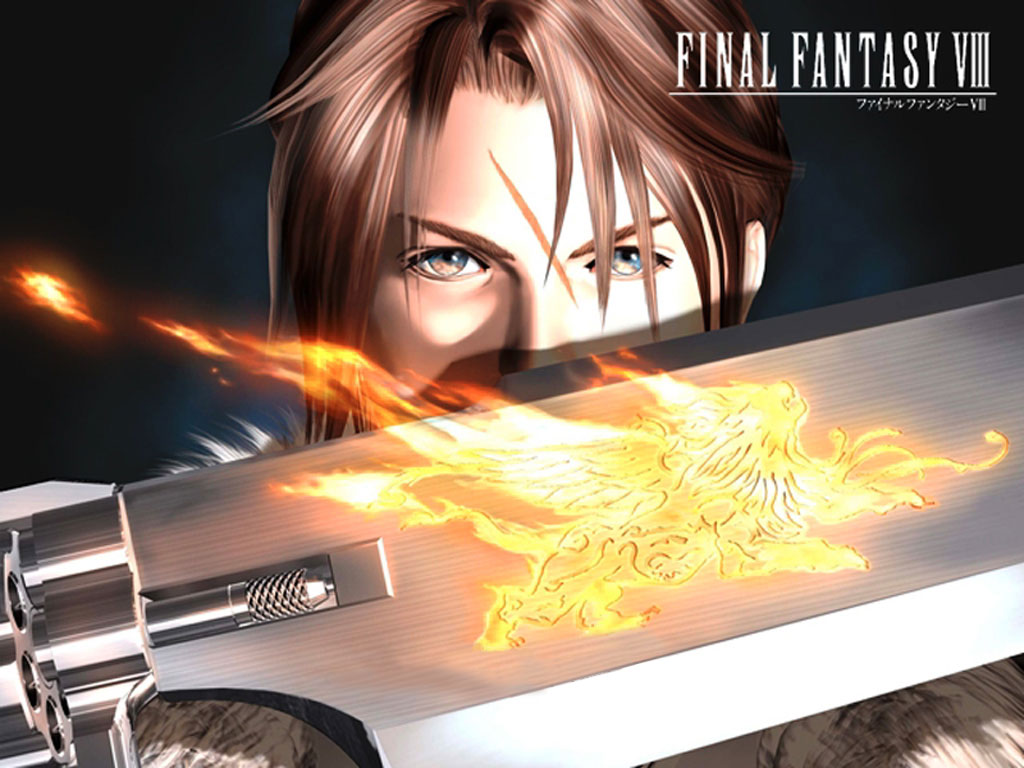
The PlayStation console saw the release of three main Final Fantasy games. The 1997 title Final Fantasy VII moved away from the two-dimensional (2D) graphics used in the first six games to three-dimensional (3D) computer graphics; the game features polygonal characters on pre-rendered backgrounds. It also introduced a more modern setting, a style that was carried over to the next game.[3] It was also the first in the series to be released in Europe. The eighth installment was published in 1999, and was the first to consistently use realistically proportioned characters and feature a vocal piece as its theme music.[3][13] Final Fantasy IX, released in 2000, returned to the series' roots by revisiting a more traditional Final Fantasy setting rather than the more modern worlds of VII and VIII.[3][14]
Three[citation needed] main installments, including one online game, were published for the PlayStation 2 (PS2). The 2001 title Final Fantasy X introduced full 3D areas and voice acting to the series, and was the first to spawn a direct video game sequel (Final Fantasy X-2).[15][16] Final Fantasy XI was released on the PS2 and PC in 2002, and later on the Xbox 360.[17][18] The first massive multi-player online role-playing game (MMORPG) in the series, Final Fantasy XI also introduced real-time battles instead of random encounters.[18] The twelfth installment, published in 2006, also includes real-time battles in large, interconnected playfields.[19][20]
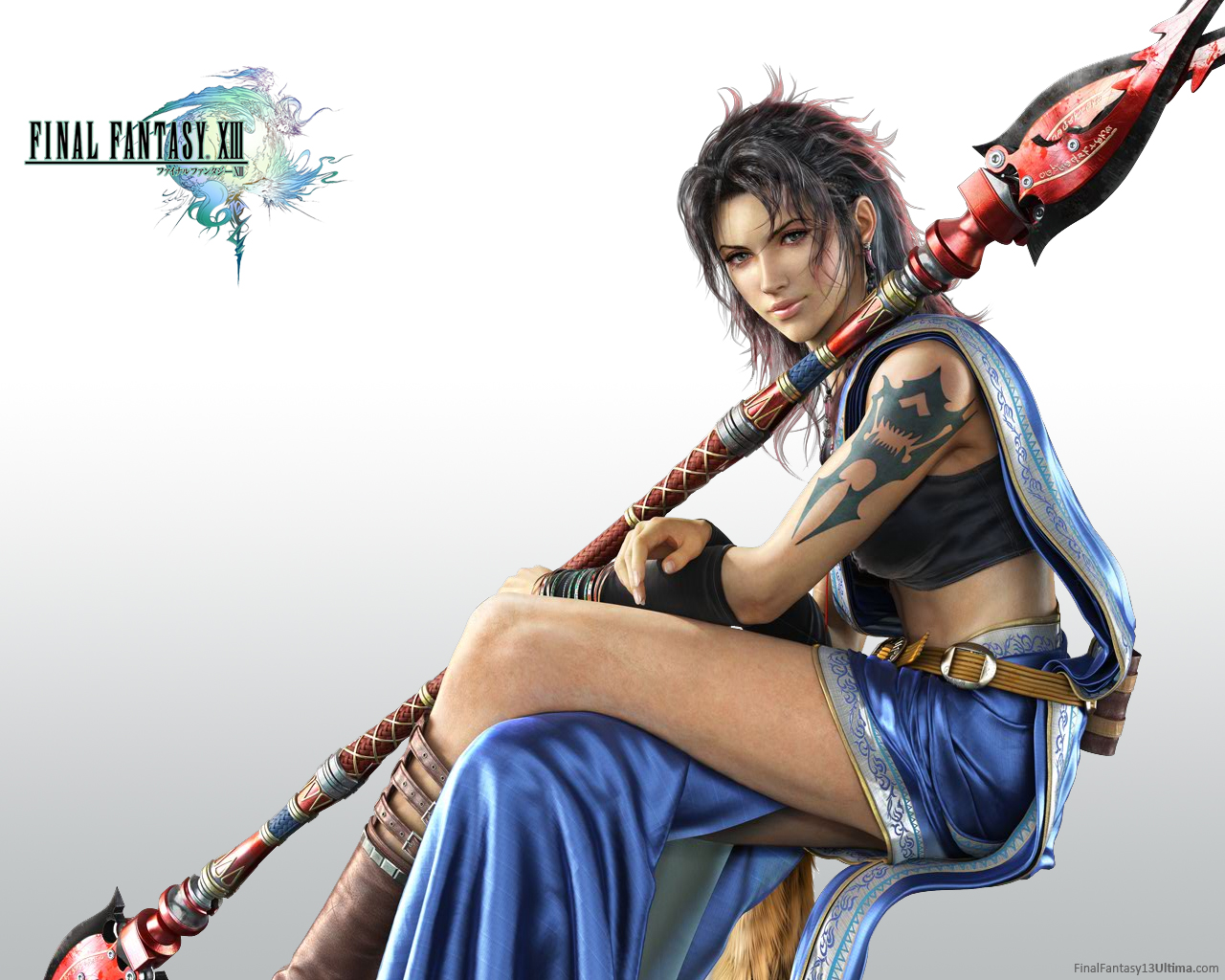
In 2009, Final Fantasy XIII was released in Japan, and in North America and Europe the following year.[21][22] It is the flagship installment of the Fabula Nova Crystallis Final Fantasy series.[23] Final Fantasy XIV, an MMORPG, was released worldwide on Microsoft Windows in 2010, with a PlayStation 3 version to follow in the coming years.[24] In July 2012, Square Enix trademarked the Final Fantasy XV domain name, and several rumors have begun circulating about when the game will be coming and what it will feature.[25] For the moment, Square Enix is remaining silent on the subject, though sources have stated that the game has been in development for four years.[26]
Sequels and spin-offs
See also: Category: Final Fantasy spin-offs
Final Fantasy has spawned numerous spin-offs and metaseries. Three Square games were released in North America with their titles changed to include "Final Fantasy": The Final Fantasy Legend and its two sequels, Final Fantasy Legend II and Final Fantasy Legend III. The games, however, are part of Square's SaGa series and feature few similarities to Final Fantasy.[27] Final Fantasy Adventure is a spin-off that spawned the Mana series.[28] Final Fantasy Mystic Quest was specifically developed for a United States audience, and Final Fantasy Tactics is a tactical RPG that features many references and themes found in the series.[28][29] The spin-off Chocobo series, Crystal Chronicles series, and Kingdom Hearts series also include multiple Final Fantasy elements.[27][30] In 2003, the Final Fantasy series' first direct sequel, Final Fantasy X-2, was released.[31] Dissidia Final Fantasy was released in 2009, a fighting game that features heroes and villains from the first ten games of the main series.[32] It was followed by a prequel in 2011.[33] Other spin-offs have taken the form of subseries—Compilation of Final Fantasy VII, Ivalice Alliance, and Fabula Nova Crystallis Final Fantasy. The fourth direct sequel in the main series, Final Fantasy XIII-2, was released in Japan in 2011 and later released in North America and Europe in 2012.Other media
Square Enix has expanded the Final Fantasy series into various media. Multiple anime and computer-generated imagery (CGI) films have been produced that are based either on individual Final Fantasy games or on the series as a whole. The first was an original video animation (OVA) titled Final Fantasy: Legend of the Crystals, a sequel to Final Fantasy V. The story was set on the same world as the game, although 200 years in the future. It was released as four 30-minute episodes, first in Japan in 1994 and later in the United States by Urban Vision in 1998. In 2001, Square Pictures released its first feature film, Final Fantasy: The Spirits Within. The film is set on a future-Earth invaded by alien life forms.[34] The Spirits Within was the first animated feature to seriously attempt to portray photorealistic CGI humans, but was considered a box office bomb.[34][35][36] 2001 also saw the release of Final Fantasy: Unlimited, a 25 episode anime series based on the common elements of the Final Fantasy series. It was broadcast in Japan by TV Tokyo and released in North America by ADV Films. In 2005, Final Fantasy VII: Advent Children, a theatrical CGI film, and Last Order: Final Fantasy VII, an OVA, were released as part of the Compilation of Final Fantasy VII.Several video games have either been adapted into or have had spin-offs in the form of manga and novels. The first was the novelization of Final Fantasy II in 1989, and was followed by a manga adaptation of Final Fantasy III in 1992.[37][38] The past decade has seen an increase in the number of non-video game adaptations and spin-offs. Final Fantasy: The Spirits Within has been adapted into a novel, the spin-off game Final Fantasy Crystal Chronicles has been adapted into a manga, and Final Fantasy XI has had a novel and manga set in its continuity.[39][40][41][42] Seven novellas based on the Final Fantasy VII universe have also been released. The Final Fantasy: Unlimited story was partially continued in novels and a manga after the anime series ended.[43] Two titles, Final Fantasy Tactics Advance and Final Fantasy: Unlimited, have been adapted into radio dramas.

Common elements
Although most Final Fantasy installments are independent, many gameplay elements recur throughout the series.[44][45] Most titles feature recycled names often inspired from various cultures' history, languages and mythology, including Asian, European, and Middle-Eastern.[46] Examples include weapon names like Excalibur and Masamune—derived from Arthurian legend and the Japanese swordsmith Masamune respectively—as well as the spell names Holy, Meteor, and Ultima.[45][46] Beginning with Final Fantasy IV, the main series adopted its current logo style that features the same typeface and an emblem designed by Japanese artist Yoshitaka Amano. The emblem relates to a title's respective plot and typically portrays a character or object in the story. Subsequent remakes of the first three games have replaced the previous logos with ones similar to the rest of the series.Characters
Further information: Character design of Final Fantasy
Character names are another recurring theme. Since the release of Final Fantasy II, including subsequent remakes of the original Final Fantasy, a character named Cid has appeared in different capacities: as a non-playable ally, a party member, and a villain. Though Cid's appearance and personality differ between titles, the character is normally related to the in-game airships. Biggs and Wedge, inspired by two Star Wars characters by the same name, appear in numerous titles as minor characters, sometimes as comic relief.[20][45] The later titles in the series feature several males with effeminate characteristics.[52][53] Recurring creatures include Chocobos and Moogles.[20] Chocobos are large, often flightless birds that appear in several installments as a means of long-distance travel for characters. Moogles, on the other hand, are white, stout creatures resembling teddy bears with wings and a single antenna. They serve different capacities in games including mail delivery, weaponsmiths, party members, and saving the game. Chocobo and Moogle appearances are often accompanied by specific musical themes that have been arranged differently for separate titles.
Origin
In the mid 1980s, Square entered the Japanese video game industry with simple RPGs, racing games, and platformers for Nintendo's Famicom Disk System. In 1987, Square designer Hironobu Sakaguchi chose to create a new fantasy role-playing game for the cartridge-based NES, and drew inspiration from popular fantasy games: Enix's Dragon Quest, Nintendo's The Legend of Zelda, and Origin Systems's Ultima series. Though often attributed to the company allegedly facing bankruptcy, Sakaguchi explained that the game was his personal last-ditch effort in the game industry and that its title, Final Fantasy, stemmed from his feelings at the time; had the game not sold well, he would have quit the business and gone back to university. Despite his explanation, publications have also attributed the name to the company's hopes that the project would solve its financial troubles.[64][66]
The game indeed reversed Square's lagging fortunes, and it became the company's flagship franchise.[35][64] Following the success, Square immediately developed a second installment. Because Sakaguchi assumed Final Fantasy would be a stand-alone title, its story was not designed to be expanded by a sequel. The developers instead chose to carry over only thematic similarities from its predecessor, while some of the gameplay elements, such as the character advancement system, were overhauled. This approach has continued throughout the series; each major Final Fantasy game features a new setting, a new cast of characters, and an upgraded battle system.[5] Video game writer John Harris attributed the concept of reworking the game system of each installment to Nihon Falcom's Dragon Slayer series,[67] with which Square was previously involved as a publisher.[68] The company regularly released new titles in the main series. However, the time between the releases of Final Fantasy XI (2002), Final Fantasy XII (2006), and Final Fantasy XIII (2009) were much longer than previous titles. Following Final Fantasy XIV, Square Enix stated that it intended to release Final Fantasy games either annually or biennially. This switch was to mimic the development cycles of Western games in the Call of Duty, Assassin's Creed and Battlefield series, as well as maintain fan-interest


ไม่มีความคิดเห็น:
แสดงความคิดเห็น