วันศุกร์ที่ 31 สิงหาคม พ.ศ. 2555

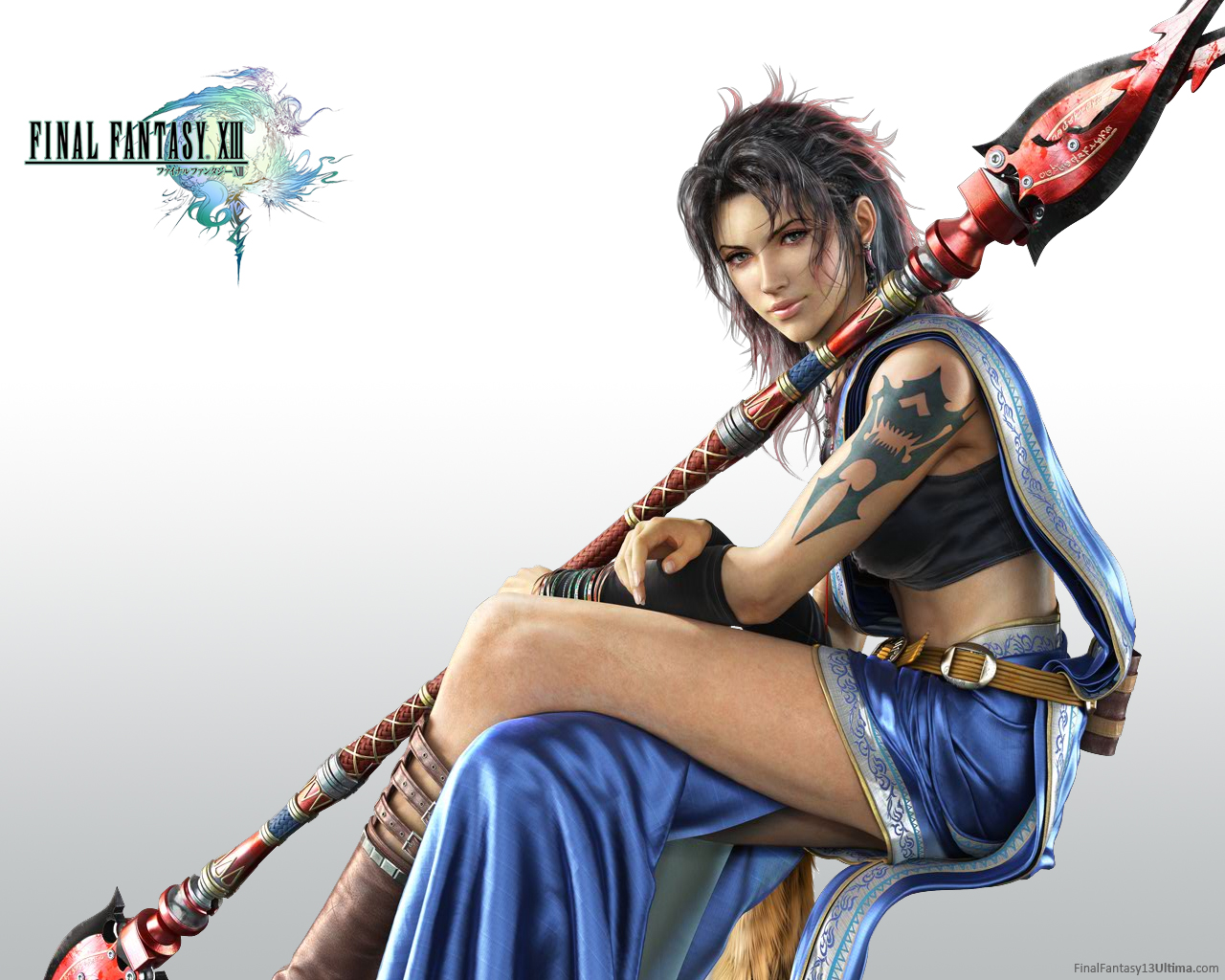
Final Fantasy

Final Fantasy (ファイナルファンタジー Fainaru Fantajī?) is a media franchise created by Hironobu Sakaguchi, and is developed and owned by Square Enix (formerly Square). The franchise centers on a series of fantasy and science fantasy role-playing video games (RPGs), but includes motion pictures, anime, printed media, and other merchandise. The series began in 1987 with the eponymous video game conceived by Sakaguchi as his last-ditch effort in the game industry; the title was a success and spawned sequels. The video game series has since branched into other genres such as tactical role-playing, action role-playing, massively multiplayer online role-playing, racing, third-person shooter, fighting and rhythm.
Although most Final Fantasy installments are supposedly independent stories with different settings and main characters, they feature identical elements that define the franchise. Recurring elements include plot themes, character names, and game mechanics. Plots center on a group of heroes battling a great evil while exploring the characters' internal struggles and relationships. Character names are frequently derived from the history, languages, and mythologies of cultures worldwide.
The series has been commercially and critically successful; it is Square Enix's best selling video game franchise, with more than 100 million units sold, and one of the best-selling video game franchises. It was awarded a star on the Walk of Game in 2006, and holds seven Guinness World Records in the Guinness World Records Gamer's Edition 2008. The series is well known for its innovation, visuals, and music, such as the inclusion of full motion videos, photo-realistic character models, and orchestrated music by Nobuo Uematsu. Final Fantasy has been a driving force in the video game industry, and the series has affected Square's business practices and its relationships with other video game developers. It has also introduced many features now common in role-playing video games and has been credited with helping to popularize console-based RPGs in markets outside Japan.

Main series

Three Final Fantasy installments were released on the Nintendo Entertainment System (NES). Final Fantasy was released in Japan in 1987 and in North America in 1990.[2][3] It introduced many concepts to the console RPG genre, and has since been remade on several platforms.[3] Final Fantasy II, released in 1988 in Japan, has been bundled with Final Fantasy in several re-releases.[3][4][5] The last of the NES installments, Final Fantasy III, was released in Japan in 1990;[6] however, it was not released elsewhere until a Nintendo DS remake in 2006.[5]
The Super Nintendo Entertainment System (SNES) also featured three installments of the main series, all of which have been re-released on several platforms. Final Fantasy IV was released in 1991; in North America, it was released as Final Fantasy II.[7][8] It introduced the "Active Time Battle" system.[9] Final Fantasy V, released in 1992 in Japan, was the first game in the series to spawn a sequel: a short anime series titled Final Fantasy: Legend of the Crystals.[3][10][11] Final Fantasy VI was released in Japan in 1994, but it was titled Final Fantasy III in North America.[12]
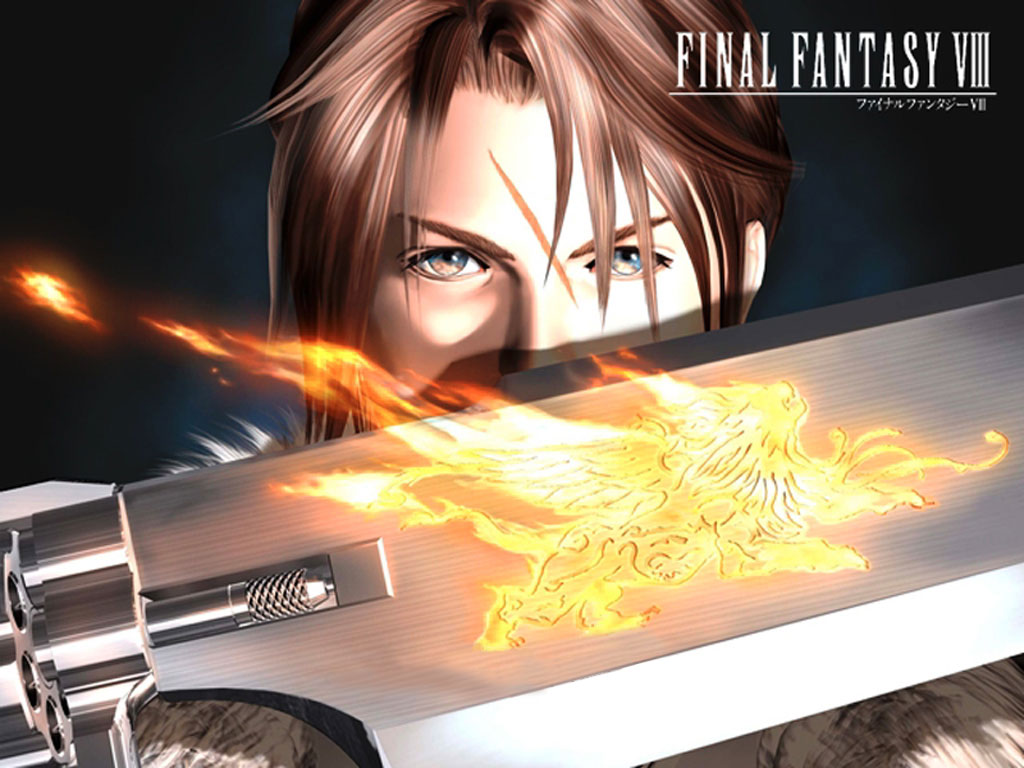
The PlayStation console saw the release of three main Final Fantasy games. The 1997 title Final Fantasy VII moved away from the two-dimensional (2D) graphics used in the first six games to three-dimensional (3D) computer graphics; the game features polygonal characters on pre-rendered backgrounds. It also introduced a more modern setting, a style that was carried over to the next game.[3] It was also the first in the series to be released in Europe. The eighth installment was published in 1999, and was the first to consistently use realistically proportioned characters and feature a vocal piece as its theme music.[3][13] Final Fantasy IX, released in 2000, returned to the series' roots by revisiting a more traditional Final Fantasy setting rather than the more modern worlds of VII and VIII.[3][14]
Three[citation needed] main installments, including one online game, were published for the PlayStation 2 (PS2). The 2001 title Final Fantasy X introduced full 3D areas and voice acting to the series, and was the first to spawn a direct video game sequel (Final Fantasy X-2).[15][16] Final Fantasy XI was released on the PS2 and PC in 2002, and later on the Xbox 360.[17][18] The first massive multi-player online role-playing game (MMORPG) in the series, Final Fantasy XI also introduced real-time battles instead of random encounters.[18] The twelfth installment, published in 2006, also includes real-time battles in large, interconnected playfields.[19][20]
In 2009, Final Fantasy XIII was released in Japan, and in North America and Europe the following year.[21][22] It is the flagship installment of the Fabula Nova Crystallis Final Fantasy series.[23] Final Fantasy XIV, an MMORPG, was released worldwide on Microsoft Windows in 2010, with a PlayStation 3 version to follow in the coming years.[24] In July 2012, Square Enix trademarked the Final Fantasy XV domain name, and several rumors have begun circulating about when the game will be coming and what it will feature.[25] For the moment, Square Enix is remaining silent on the subject, though sources have stated that the game has been in development for four years.[26]

Sequels and spin-offs

Final Fantasy has spawned numerous spin-offs and metaseries. Three Square games were released in North America with their titles changed to include "Final Fantasy": The Final Fantasy Legend and its two sequels, Final Fantasy Legend II and Final Fantasy Legend III. The games, however, are part of Square's SaGa series and feature few similarities to Final Fantasy.[27] Final Fantasy Adventure is a spin-off that spawned the Mana series.[28] Final Fantasy Mystic Quest was specifically developed for a United States audience, and Final Fantasy Tactics is a tactical RPG that features many references and themes found in the series.[28][29] The spin-off Chocobo series, Crystal Chronicles series, and Kingdom Hearts series also include multiple Final Fantasy elements.[27][30] In 2003, the Final Fantasy series' first direct sequel, Final Fantasy X-2, was released.[31] Dissidia Final Fantasy was released in 2009, a fighting game that features heroes and villains from the first ten games of the main series.[32] It was followed by a prequel in 2011.[33] Other spin-offs have taken the form of subseries—Compilation of Final Fantasy VII, Ivalice Alliance, and Fabula Nova Crystallis Final Fantasy. The fourth direct sequel in the main series, Final Fantasy XIII-2, was released in Japan in 2011 and later released in North America and Europe in 2012.

Other media

Square Enix has expanded the Final Fantasy series into various media. Multiple anime and computer-generated imagery (CGI) films have been produced that are based either on individual Final Fantasy games or on the series as a whole. The first was an original video animation (OVA) titled Final Fantasy: Legend of the Crystals, a sequel to Final Fantasy V. The story was set on the same world as the game, although 200 years in the future. It was released as four 30-minute episodes, first in Japan in 1994 and later in the United States by Urban Vision in 1998. In 2001, Square Pictures released its first feature film, Final Fantasy: The Spirits Within. The film is set on a future-Earth invaded by alien life forms.[34] The Spirits Within was the first animated feature to seriously attempt to portray photorealistic CGI humans, but was considered a box office bomb.[34][35][36] 2001 also saw the release of Final Fantasy: Unlimited, a 25 episode anime series based on the common elements of the Final Fantasy series. It was broadcast in Japan by TV Tokyo and released in North America by ADV Films. In 2005, Final Fantasy VII: Advent Children, a theatrical CGI film, and Last Order: Final Fantasy VII, an OVA, were released as part of the Compilation of Final Fantasy VII.
Several video games have either been adapted into or have had spin-offs in the form of manga and novels. The first was the novelization of Final Fantasy II in 1989, and was followed by a manga adaptation of Final Fantasy III in 1992.[37][38] The past decade has seen an increase in the number of non-video game adaptations and spin-offs. Final Fantasy: The Spirits Within has been adapted into a novel, the spin-off game Final Fantasy Crystal Chronicles has been adapted into a manga, and Final Fantasy XI has had a novel and manga set in its continuity.[39][40][41][42] Seven novellas based on the Final Fantasy VII universe have also been released. The Final Fantasy: Unlimited story was partially continued in novels and a manga after the anime series ended.[43] Two titles, Final Fantasy Tactics Advance and Final Fantasy: Unlimited, have been adapted into radio dramas.

Common elements

Although most Final Fantasy installments are independent, many gameplay elements recur throughout the series.[44][45] Most titles feature recycled names often inspired from various cultures' history, languages and mythology, including Asian, European, and Middle-Eastern.[46] Examples include weapon names like Excalibur and Masamune—derived from Arthurian legend and the Japanese swordsmith Masamune respectively—as well as the spell names Holy, Meteor, and Ultima.[45][46] Beginning with Final Fantasy IV, the main series adopted its current logo style that features the same typeface and an emblem designed by Japanese artist Yoshitaka Amano. The emblem relates to a title's respective plot and typically portrays a character or object in the story. Subsequent remakes of the first three games have replaced the previous logos with ones similar to the rest of the series.

Characters

Character names are another recurring theme. Since the release of Final Fantasy II, including subsequent remakes of the original Final Fantasy, a character named Cid has appeared in different capacities: as a non-playable ally, a party member, and a villain. Though Cid's appearance and personality differ between titles, the character is normally related to the in-game airships. Biggs and Wedge, inspired by two Star Wars characters by the same name, appear in numerous titles as minor characters, sometimes as comic relief.[20][45] The later titles in the series feature several males with effeminate characteristics.[52][53] Recurring creatures include Chocobos and Moogles.[20] Chocobos are large, often flightless birds that appear in several installments as a means of long-distance travel for characters. Moogles, on the other hand, are white, stout creatures resembling teddy bears with wings and a single antenna. They serve different capacities in games including mail delivery, weaponsmiths, party members, and saving the game. Chocobo and Moogle appearances are often accompanied by specific musical themes that have been arranged differently for separate titles.


 Origin
In the mid 1980s, Square entered the Japanese video game industry with simple RPGs, racing games, and platformers for Nintendo's Famicom Disk System. In 1987, Square designer Hironobu Sakaguchi chose to create a new fantasy role-playing game for the cartridge-based NES, and drew inspiration from popular fantasy games: Enix's Dragon Quest, Nintendo's The Legend of Zelda, and Origin Systems's Ultima series. Though often attributed to the company allegedly facing bankruptcy, Sakaguchi explained that the game was his personal last-ditch effort in the game industry and that its title, Final Fantasy, stemmed from his feelings at the time; had the game not sold well, he would have quit the business and gone back to university. Despite his explanation, publications have also attributed the name to the company's hopes that the project would solve its financial troubles.[64][66]
The game indeed reversed Square's lagging fortunes, and it became the company's flagship franchise.[35][64] Following the success, Square immediately developed a second installment. Because Sakaguchi assumed Final Fantasy would be a stand-alone title, its story was not designed to be expanded by a sequel. The developers instead chose to carry over only thematic similarities from its predecessor, while some of the gameplay elements, such as the character advancement system, were overhauled. This approach has continued throughout the series; each major Final Fantasy game features a new setting, a new cast of characters, and an upgraded battle system.[5] Video game writer John Harris attributed the concept of reworking the game system of each installment to Nihon Falcom's Dragon Slayer series,[67] with which Square was previously involved as a publisher.[68] The company regularly released new titles in the main series. However, the time between the releases of Final Fantasy XI (2002), Final Fantasy XII (2006), and Final Fantasy XIII (2009) were much longer than previous titles. Following Final Fantasy XIV, Square Enix stated that it intended to release Final Fantasy games either annually or biennially. This switch was to mimic the development cycles of Western games in the Call of Duty, Assassin's Creed and Battlefield series, as well as maintain fan-interest
 The Artistic design, including character and monster creations, was handled by Japanese artist Yoshitaka Amano from Final Fantasy through Final Fantasy VI. Amano also handled title logo designs for all of the main series and the image illustrations from Final Fantasy VII onward.[71] Tetsuya Nomura was chosen to replace Amano because Nomura's designs were more adaptable to 3D graphics. He worked with the series from Final Fantasy VII through Final Fantasy X;[46][71] for Final Fantasy IX, however, character designs were handled by Shukō Murase, Toshiyuki Itahana, and Shin Nagasawa.[78] Nomura is also the character designer of the Kingdom Hearts series, Compilation of Final Fantasy VII, and the Fabula Nova Crystallis: Final Fantasy XIII.[79] Other designers include Nobuyoshi Mihara and Akihiko Yoshida. Mihara was the character designer for Final Fantasy XI, and Yoshida served as character designer for Final Fantasy Tactics, the Square-produced Vagrant Story, and Final Fantasy XI


Graphics and technology

Because of graphical limitations, the first titles on the NES feature small sprite representations of the leading party members on the main world screen. Battle screens use more detailed, full versions of characters in a side-view perspective. This practice was used until Final Fantasy VI, which uses detailed versions for both screens. The NES sprites are 26 pixels high and use a color palette of 4 colors. 6 frames of animation are used to depict different character statuses like "healthy" and "fatigued". The SNES installments use updated graphics and effects, as well as higher quality audio than in previous games, but are otherwise similar to their predecessors in basic design. The SNES sprites are 2 pixels shorter, but have larger palettes and feature more animation frames: 11 colors and 40 frames respectively. The upgrade allowed designers to have characters be more detailed in appearance and express more emotions. The first title includes non-player characters (NPCs) the player could interact with, but they are mostly static in-game objects. Beginning with the second title, Square used predetermined pathways for NPCs to create more dynamic scenes that include comedy and drama


วันพฤหัสบดีที่ 30 สิงหาคม พ.ศ. 2555

Mortal Kombat

The Mortal Kombat started development in 1991 with only four people: Ed Boon, John Tobias, John Vogel and Dan Forden.[21] As Ed Boon stated in an interview with Major Nelson, "The first Mortal Kombat game was 4 guys, literally, one programmer, myself (Boon), two graphics guys (Tobias and Vogel), and a sound guy (Forden) was the entire team, literally"[22] Originally, Boon and Tobias wanted to create a video game starring actor and martial artist Jean-Claude Van Damme, with a digitized version of the action star fighting villains.[23] Intending to make a game based on the Van Damme film Bloodsport, Boon and Tobias decided to continue their project even after the deal to use the film license fell through, even basing one of their developed characters, Johnny Cage, on Van Damme himself.[2][24]


Ed Boon stated for six out of the eight months while they were in production of Mortal Kombat, ".....nobody could come up with a name nobody didn't hate." Some of the names suggested were "Kumite", "Dragon Attack", "Death Blow", and even at one point, "Fatality". Someone had written down "combat" on the drawing board for the names in Ed Boon's office and someone wrote a K over the C, according to Ed Boon, "...just to be kind of weird..." Steve Ritchie, a pinball designer at that time, was sitting in Ed Boon's office and saw the word "Kombat" and said to Ed Boon, 'Why don't you name it Mortal Kombat?' and according to Ed Boon, that name "just stuck." The series itself commonly uses the letter "K" in place of "C" for words containing the hard C sound, thus misspelling them. According to Boon, during game development they usually spell the words correctly and change them later when the developers recognize an opportunity.
Regarding the influence of the film Big Trouble in Little China, Tobias wrote that although this movie "kind of Americanized my obsession for supernatural kung fu films from China, it was not my biggest influence. My biggest influences came from Tsui Hark films -- Zu Warriors & The Swordsman. We had to get them from bootleggers in Chgo's Chinatown." The team switched from digitized actors to motion capture technology (the quote is incorrectly referring to Midway as Acclaim): "To make the characters in video games more realistic, actors are being recruited to serve as models. Acclaim, the video-game company that made Mortal Kombat, has created a special 'motion capture studio' for this purpose. A martial-arts expert with as many as 100 electronic sensors taped to his body sends precise readings to a camera as he goes through his moves—running, jumping, kicking, punching. The action is captured, digitized and synthesized into a 'naked' wire-frame model stored in a computer. Those models can then be 'dressed' with clothing, facial expressions and other characteristics by means of a computer technique called texture mapping."

Graphics

Screenshot of Mortal Kombat, showing the characters Johnny Cage and Raiden


In the original of Mortal Kombat was developed with digitized sprites based on actors, as opposed to animated cartoon graphics. Mortal Kombat 4 brought the series into 3D, replacing the digitized fighters of previous games with polygon models.
More so than other fighting games at the time, Mortal Kombat was famous for re-coloring certain sprites to appear as different characters. This was most prominent with the series' various ninja/assassin characters. Many of the more popular characters were spawned from these palette swaps. In the  first game, Scorpion, Sub-Zero, and Reptile were essentially the same character. The colors of their attire, fighting stance, and special techniques indicated the difference. Sub-Zero wore blue attire, Scorpion wore yellow, and Reptile wore green. Later games added other ninjas based on the same model, as well as several female ninja color swap characters initially also using just one base model (since Mortal Kombat II). All of them gradually became very different characters in the following installments of the series.


Miscellaneous

The Mortal Kombat included secret characters, secret games, and other Easter eggs. Mortal Kombat 3, for example, included a hidden game of Galaga[18] as well as a hidden game of Pong in Mortal Kombat II. Many extras in the series have only been accessible through very challenging, demanding, and sometimes coincidental requirements. The Sega Mega Drive/Genesis versions had some unique eggs: in Mortal Kombat, a head shot of the President of Probe Software, Fergus McGovern, flew in front of the moon in the Pit stage, while in Mortal Kombat II, Raiden could perform a "Fergality" on the Armory stage. The Sega Mega CD version also contained an additional code (known as the "Dad's Code"), which changed the names of the fighters to that of characters from the classic BBC comedy series Dad's Army. In the 1992 arcade original when fighting on The Pit stage, the player can qualify for a fight at the bottom of The Pit with the hidden character Reptile, who has the powers of Scorpion and Sub-Zero.[33]


! Some Easter eggs originated from in-jokes between members of the development team. One example is "Toasty", which found its way into the game in the form of a small image of sound designer Dan Forden, who would appear in the corner of the screen during gameplay (after performing an uppercut) and yell the word "Toasty". This egg was also the key to unlocking the hidden character Smoke when it happened in the Portal stage. Another note of interest is in Mortal Kombat 4, Forden would say "Toasty! 3D!" after Scorpion did his burn fatality, a reference to the fact that it is the first 3D game of the series. "Toasty" is also found in Mortal Kombat: Shaolin Monks, appearing randomly after the character pulls off a chain of hits, though the picture of Forden was removed for that version. Toasty is also included in Mortal Kombat for the PlayStation Vita. It is a power-up that triggers a torrent of body parts in the "Test Your Slice" minigame. "Toasty" also appears in Mortal Kombat (9). Yet another private joke was the hidden character "Noob Saibot", who appeared in various versions of the game. The character's name derived from two of the series' creators' surnames, Ed Boon and John Tobias, spelled backward.In addition, the character Ermac's name came from the first Mortal Kombat, which had "ERMAC5" (Error Macro 5) on its diagnostics screen; players presumed this dealt with some secret character. The development team decided to turn this rumor into an actual character, who was introduced in Ultimate Mortal Kombat 3 as a secret character. The character Mokap is based upon Carlos Pesina who leads the motion capture team for modern MK games (and previously played Raiden in the first and second games).

วันอาทิตย์ที่ 26 สิงหาคม พ.ศ. 2555

PlayStation 3


Product Features

  • Play the best high-definition games
  • Watch high-definition movies on the built-in Blu-ray player
  • HD streaming from Netflix, Hulu Plus, CinemaNow, Vudu, Amazon Instant Video, MLB.TV, NHL GameCenter and more
  • 320GB HDD for storing games, music, videos, and photos


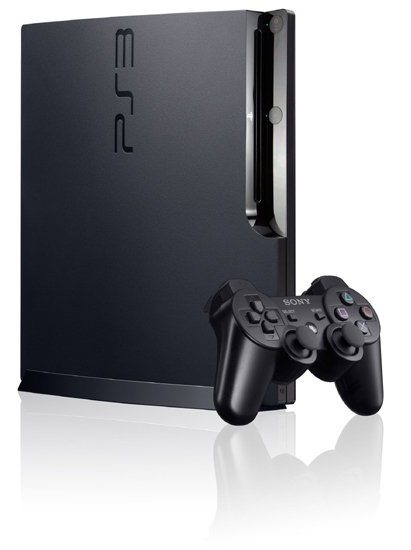
    The PlayStation 3 320 GB Call of Duty: Modern Warfare 3 bundle provides the action and adventure, as well as the unique blend of entertainment, excitement and fun that PlayStation 3 is famous for. The bundle consists of a PS3 loaded with a hefty 320 GB hard drive, a DualShock 3 controller, a copy of Call of Duty: Modern Warfare 3, and a 30-Day free membership to PlayStation Plus. Couple all this with the advanced audio-video features of the PlayStation 3, which now includes disc-free access to Netflix,* as well as a 3D gaming option,** and you have the perfect means to enjoy the world of modern digital entertainment. 

What's Under the Hood of the 320 GB PS3

As with previous models, the PlayStation 3 320 GB system features an IBM "Cell" processor and a co-developed NVIDIA graphics processor that together allow the system to perform two trillion calculations per second. Yet the 320 GB system manages to improve on this with its 45nm version of the processor, which although running at the same 60+nm speed as previous PS3 versions, uses less energy. This makes the unit's smaller size and quieter fan possible.
An isolated view of the PS3 320 GB console, with included DualShock 3 controller
320 GB of storage in a game console, controller and Call of Duty bundle.
(Stand not included)

30-days of free PlayStation Plus access with the purchase of the PS3 320 GB Call of Duty Modern Warfare 3 Bundle
Enjoy 30-days of free PlayStation Plus access, featuring enhanced game content.
 
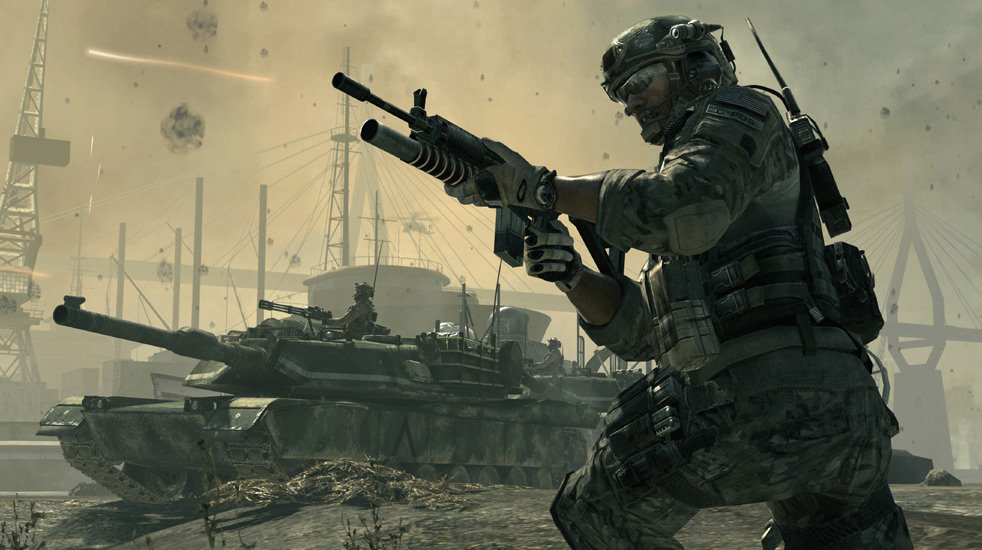
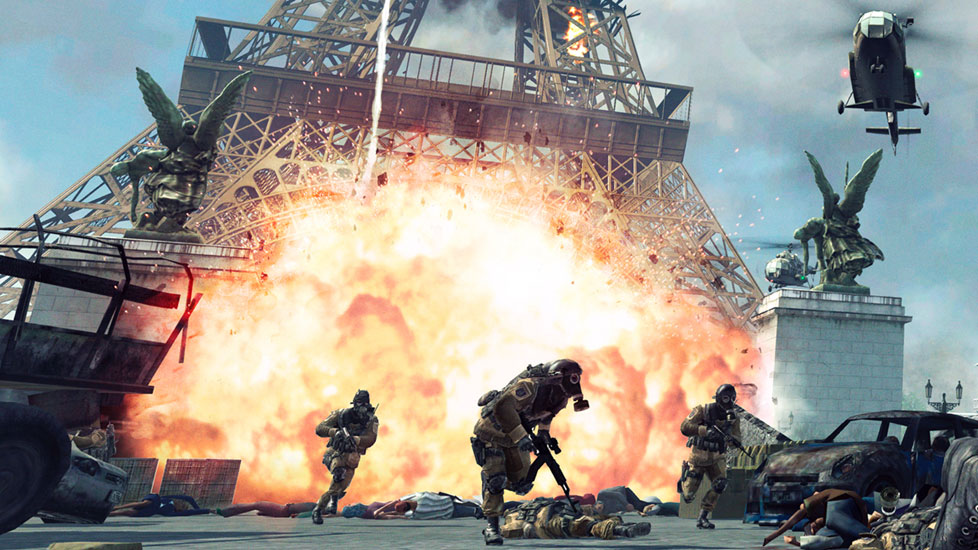
Call of Duty: Modern Warfare 3 screenshot 1
Continue the 'Modern Warfare' action in the third release in the series.

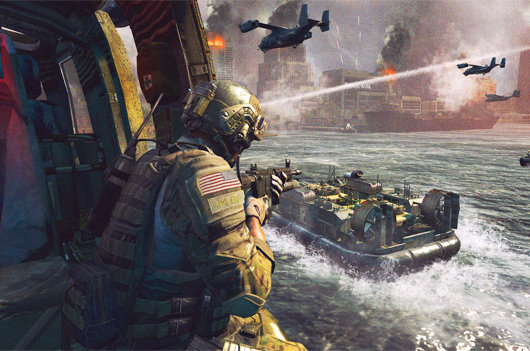
Call of Duty: Modern Warfare 3 screenshot 2
Multiplayer action that is bigger and better than ever.

Call of Duty: Modern Warfare 3 screenshot 3
New and addictive online game modes, and access to the Call of Duty Elite online service.

Along with the traditional AV and composite connections, the 320 GB system also boasts an HDMI (High-Definition Multimedia Interface) port, which delivers uncompressed, unconverted digital picture and sound to compatible high-definition TVs and projectors. (The system is capable of 128-bit pixel precision and 1080p resolution*** for a full HD experience) This console also provides for an extreme sound experience by supporting Dolby Digital 5.1, DTS 5.1, as well as Linear PCM 7.1. Finally, it features cross connectivity with your PC network and PlayStation Portable (PSP) and its pre-installed, 320 GB hard disc drive allows you to save games as well as download content from the Internet.

Blu-ray, PlayStation Network Downloads and Beyond
PlayStation 3 utilizes the Blu-ray disc media format - the only game console that does so. This gives users the best high-definition viewing experience on your television, by way of the format's ability to hold six times as much data as traditional DVDs. This tremendous capacity, combined with the awesome power of the system's processor and graphics card, promises an endless stream of mind-blowing games and other multimedia content. This doesn't mean though that the PS3 is limited to Blu-ray discs. It also supports CD-ROM, CD-RW, DVD, DVD-ROM, DVD-R, DVD+R formats. In addition, PlayStation 3 system software includes BD Live support that allows you to play discs that support Blu-ray Disc Profile 2.0 (BD-LIVE), meaning you can also connect to the Internet while playing discs that support this format to obtain additional features. And of course PS3 owners also receive free access to the PlayStation Network (PSN), where through the PlayStation Store and PlayStation Home, they can download games, game demos, movies and other content, as well as chat with friends, play mini-games, compete in tournaments and explore dedicated game spaces.

A Sensational Controller
The DualShock 3 wireless controller included with the PlayStation 3 320 GB system provides an intuitive gameplay experience, with pressure sensors in each action button and the inclusion of the highly sensitive Sixaxis motion sensing technology. Each hit, crash and explosion is more realistic when the user feels the rumble right in the palm of their hand. The DualShock 3 can even detect natural movements for real-time and high precision interactive play, acting as a natural extension of the user's body. DualShock 3 utilizes Bluetooth technology for wireless game play and the controller's detachable USB cable to seamlessly and automatically charge the controller when connected to the PlayStation 3. By integrating all of these features into the popular PlayStation controller design, the DualShock 3 further enhances the advanced gameplay experience only available with the PlayStation 3 system.
 

Console Specifications
  • CPU / GPU - Cell Broadband Engine (Cell/B.E.) / RSX
  • Sound - LPCM 7.1ch, Dolby Digital, Dolby Digital Plus, Dolby TrueHD, DTs, DTS-HD, AAC
  • Memory - 256 MB XDR Main RAM, 256 MB GDDR3 VRAM
  • HDD - 320 GB 2.5" Serial ATA
  • Networking - Ethernet (X1 (10BASE-T,100BASE-TX, 1000BASE-T)); IEEE 802.11 b/g; Bluetooth 2.0 (EDR)
  • Controller - DualShock 3 wireless controller included
  • AV Output - Resolution (1080p***, 1080i, 720p, 480p, 480i (for PAL 576p, 576i)); HDMI OUT + Bravia Synch (1); AV Multi out (1); Digital out optical (1)
  • BD/DVD/CD Drive (read only) - BD 2x (BD-ROM); DVD 8x (DVD-ROM); CD 24x (CD-ROM)
  • USB Ports - 2
  • Backwards Compatibility (PS1 and PS2 games on disc) - No
  • Dimensions - 13.385" (w) x 13.385" (h) x 6.299" (d)
  • Netflix Video Streaming* - Yes, disc-free; 1080p high definition with Dolby 5.1 channel surround sound supported
  • 3D Gaming** - Enjoy Stereoscopic 3D gaming and movies with your PS3 system, 3DTV and 3D compatible software

Product Description

PlayStation 3 CALL OF DUTY MW3 Bundle: The PlayStation 3 system is the only gaming console that delivers a complete high-definition entertainment system with a built-in Blu-ray player, large hard drive, Wi-Fi, the best HD streaming videos and movies, and free PlayStation Network membership for endless multiplayer gaming.


Call of Duty: Modern Warfare 3 is back: What began in the U.S. has lit the world on fire. Now in World War III, only the stakes match the firepower, and stopping this ever-escalating global conflict will take players on a cinematic thrill-ride as only Call of Duty can deliver.

• Single Player: The Stakes have never been higher, the entire world is in the throes of war — from NYC to London, Paris and Berlin.
• Special Ops: Survival Mode with the addictiveness and magic of MP + the beloved missions. A minor mode becomes major.
• Multiplayer: The best MP experience in gaming gets better with Alpha and new MP features — the connections and experiences are even bigger


บทความที่เกี่ยวข้อง
WATCHES
BABY CLOTHING 
BARBIE
MODEL
CAMERA
JEWELRY
SHOES